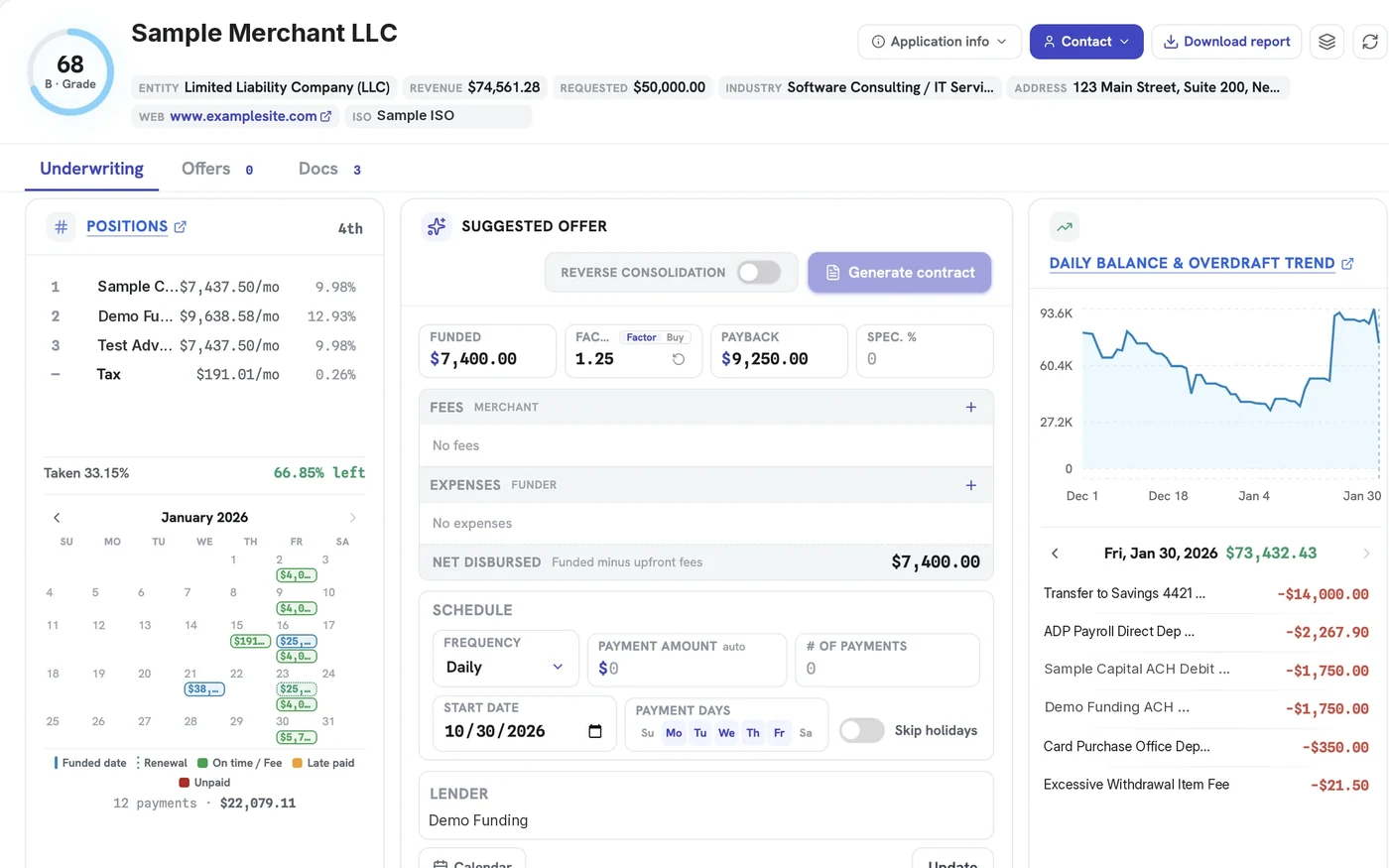
Statement parsing
Bank statements read automatically, no retyping.
Funders, software and service providers across the MCA industry.
Tell us about your shop and we’ll reply within one business day.
We run the books and taxes behind your funding operation, from the first deal to year-end filings.
Clean numbers you can hand to your investors, your syndicators and your CPA.
On a free call, we look at your books, bank accounts and CRM, then confirm how many hours a week your book needs.
We get access to your CRM, bank, ACH system and QuickBooks, and learn how your shop runs.
Daily entries and payments, a monthly close with reports, and year-end taxes, on a set schedule.
| 40+ hours On site option free of charge | $60 |
| 30–39 hours | $63 |
| 25–29 hours | $65 |
| 20–24 hours | $70 |
| 15–19 hours | $75 |
| 11–14 hours | $80 |
| 6–10 hours | $85 |
| 0–5 hours | $90 |
| Review / manager hours | $120 |
| Sales tax, bookkeeping client | $175 |
| Sales tax, non-bookkeeping client | $325 |
| Business year-end taxes | from $1,950 |
| Business year-end taxes, 1 partner | from $2,350 |
| Each additional partner | from $275 |
| Personal year-end taxes | from $350 |
| Full-year write-up (previous year) | from $1,900 |
| Partner / manager consulting, hourly | from $350 / $275 |
| State and federal notices / audit, hourly | $115 |
| Corporation formation | from $600 |
| Cash analysis | $2,000 ($1,000–$4,000) |
“From” prices are starting prices. The final price depends on the size and complexity of the work.
When you work with BAS, real people who know MCA keep your books, not a black box. Here’s the team.




Book a free consultation and we’ll confirm your weekly hours and your rate.
Our team handles the books behind your funding operation, from the first payment on a deal to the last syndicator payout.
We bill bookkeeping by the hour. The more weekly hours your book needs, the lower your rate.
Your rate is set by the total bookkeeping hours you use each week.
Bookkeeping is billed hourly, from $60 to $90 an hour. Tax and business services are priced per service.
Book a free consultation and we’ll confirm your weekly hours and your rate.
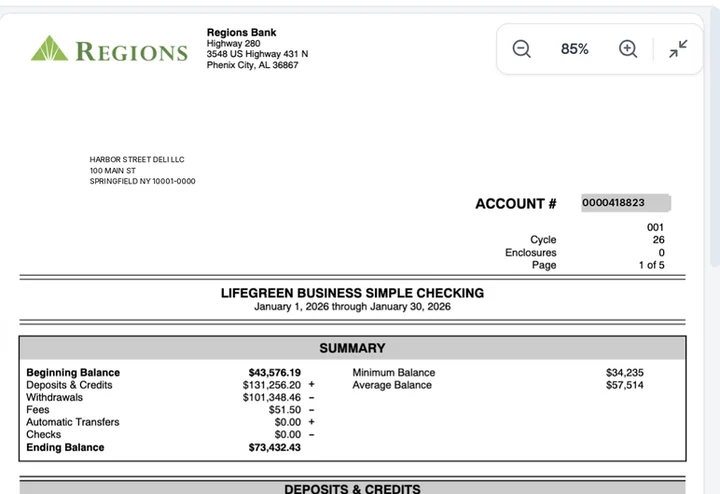
AI reads every bank statement, scores the deal against your box, and tracks it to payoff.
Bank statements are parsed automatically. Each file is then scored, graded and matched with an offer using the criteria you set in your account.
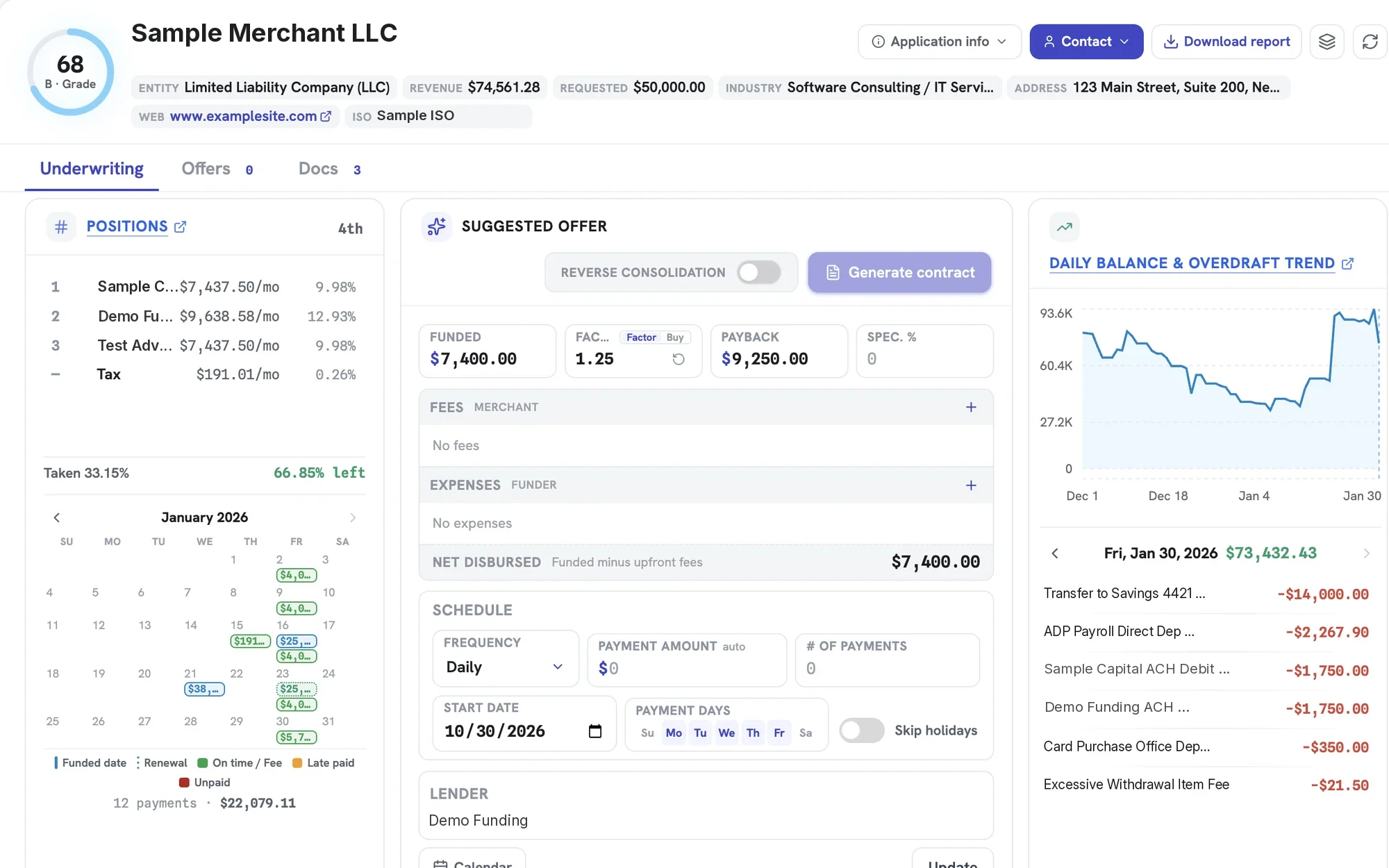
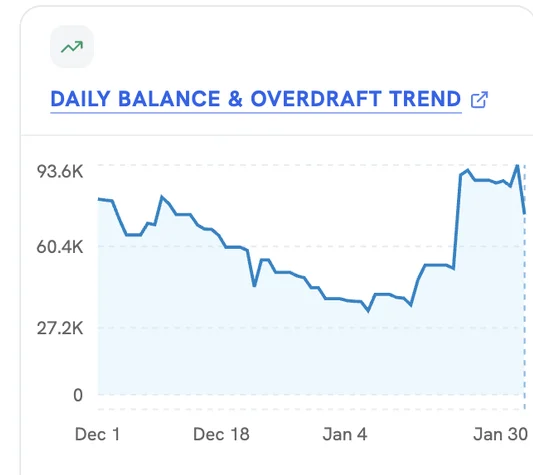
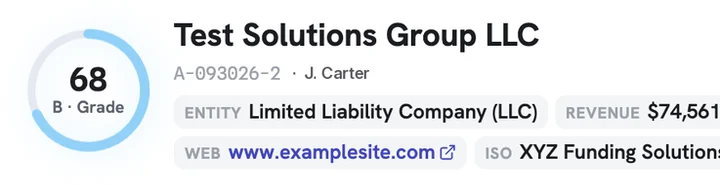
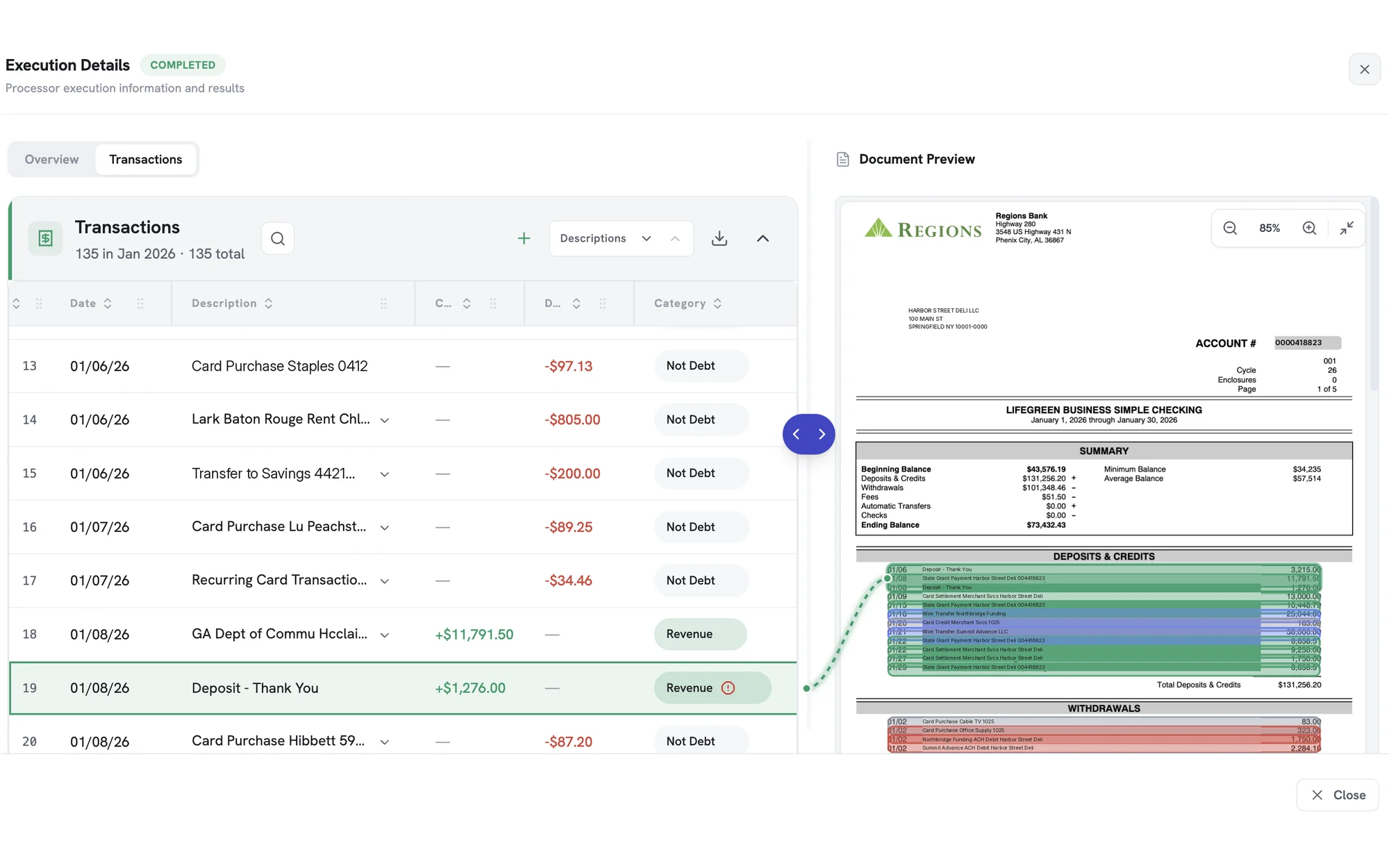
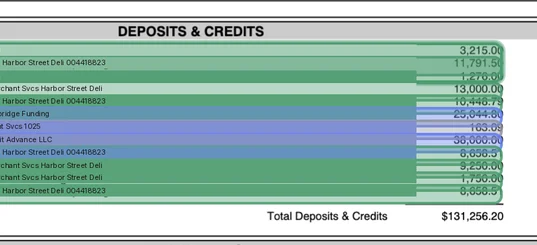
Every parsed transaction is traced back to its line on the bank statement, so you can check the numbers yourself.
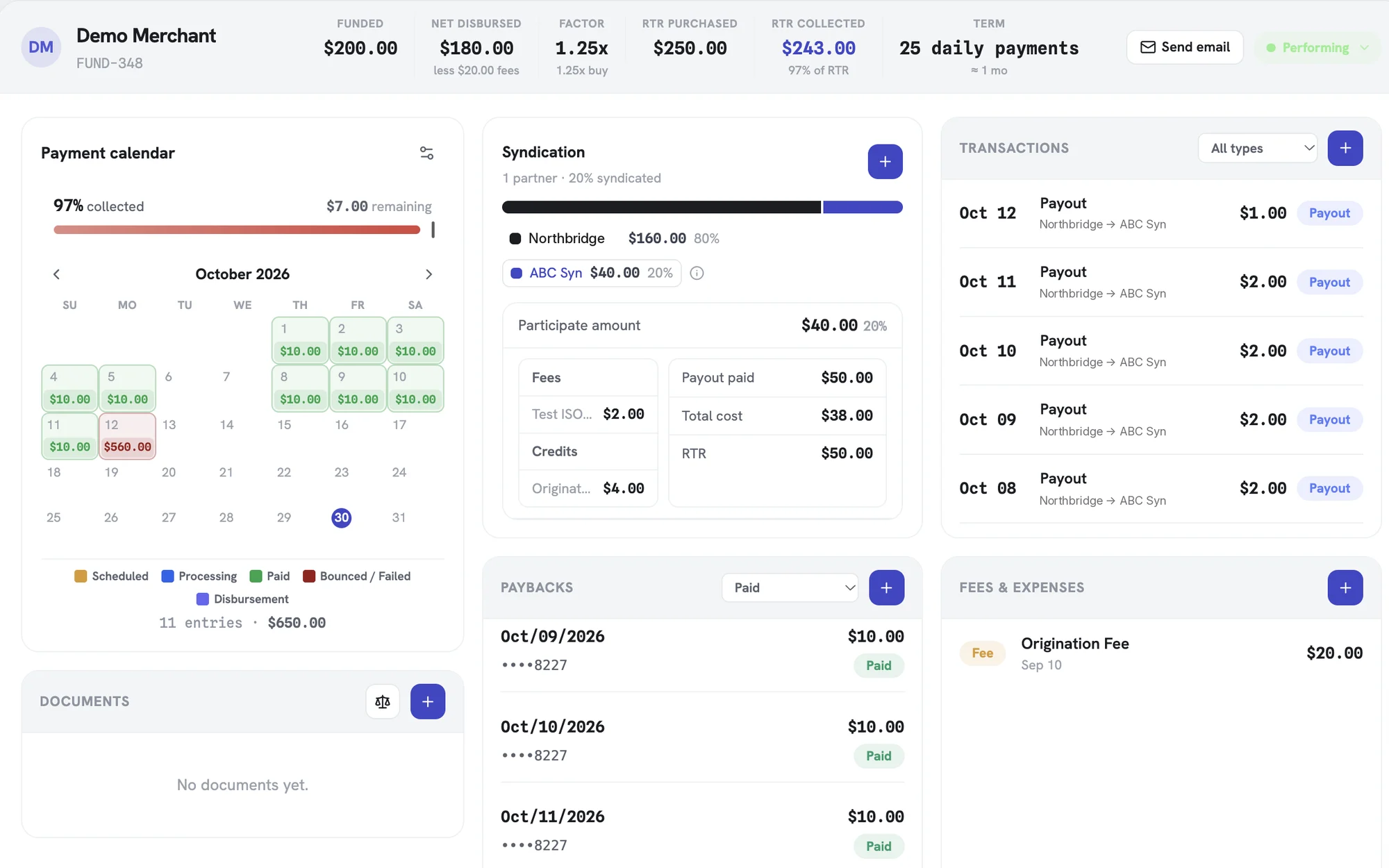
Payment calendar, syndication, paybacks and fees for each deal after it funds.
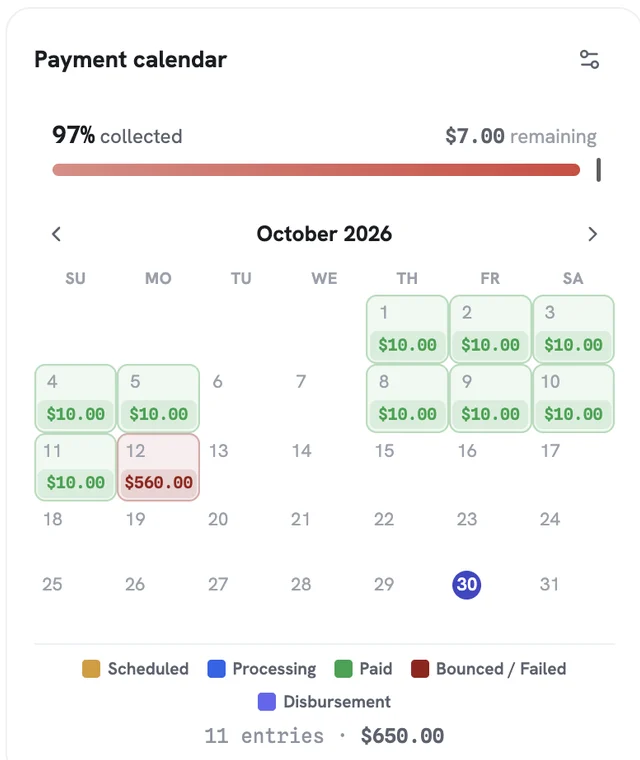
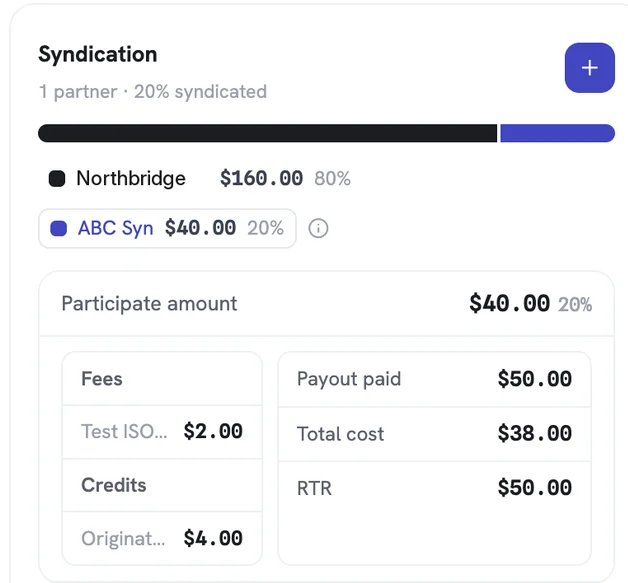
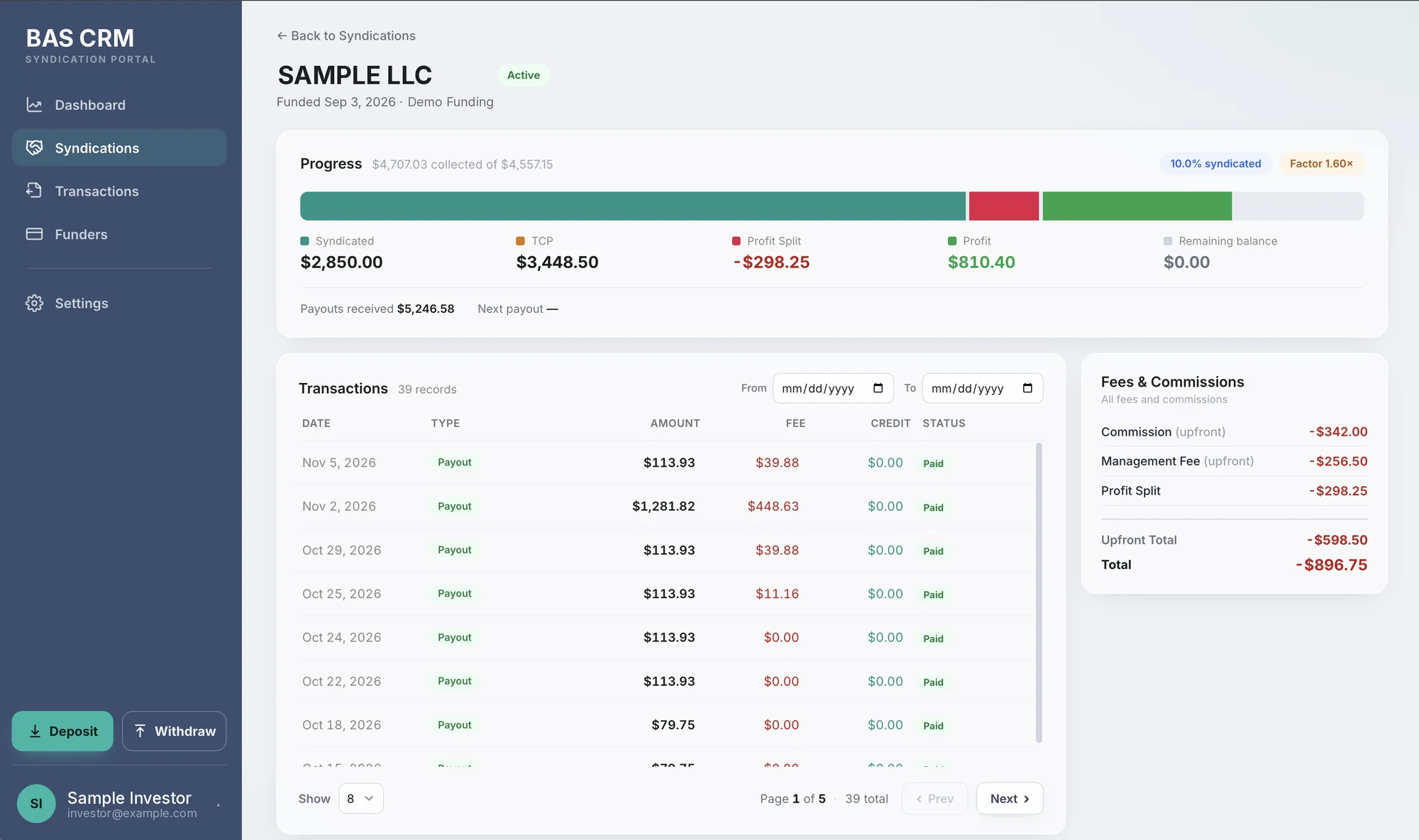
Each syndicator gets their own portal with deal progress, payouts, fees and every transaction.
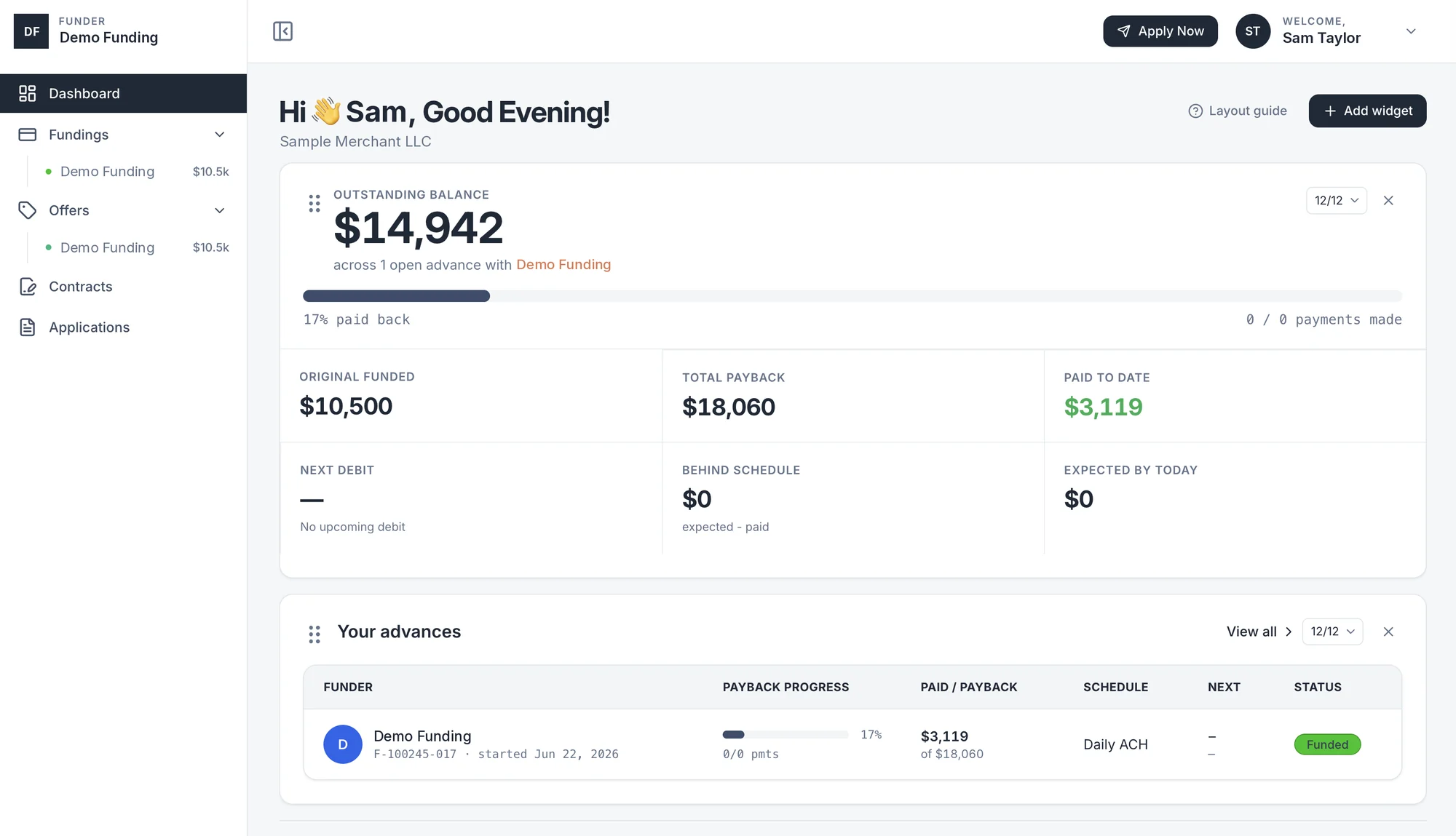
Each merchant gets a portal with their balance, payback progress, contracts and offers, so fewer calls come to your team.
Bank statements are parsed automatically, and every transaction is traced back to its line on the statement.
Each file is scored, graded and matched with an offer using the criteria you set in your account.
After funding, the payment calendar, syndication, paybacks and fees are tracked on every deal.
Bank statements read automatically, no retyping.
Every file scored against your own funding box.
Matched with an offer from the criteria you set.
Each parsed transaction traced to its statement line.
Every funded deal’s payments, day by day.
Participants, paybacks and fees on each deal.
Book a demo and we’ll walk you through it.
BAS CRM works with these payment, banking, underwriting and communication tools, and checks the public records funders rely on.
Product names and trademarks belong to their owners. Public-record sources are data sources BAS CRM checks, not partners.
Bookkeeping is billed by the hour, and your rate drops as your weekly hours grow. Tax and business services are priced per service.
| 40+ hours On site option free of charge | $60 |
| 30–39 hours | $63 |
| 25–29 hours | $65 |
| 20–24 hours | $70 |
| 15–19 hours | $75 |
| 11–14 hours | $80 |
| 6–10 hours | $85 |
| 0–5 hours | $90 |
| Review / manager hours | $120 |
| Sales tax, bookkeeping client | $175 |
| Sales tax, non-bookkeeping client | $325 |
| Business year-end taxes | from $1,950 |
| Business year-end taxes, 1 partner | from $2,350 |
| Each additional partner | from $275 |
| Personal year-end taxes | from $350 |
| Full-year write-up (previous year) | from $1,900 |
| Partner / manager consulting, hourly | from $350 / $275 |
| State and federal notices / audit, hourly | $115 |
| Corporation formation | from $600 |
| Cash analysis | $2,000 ($1,000–$4,000) |
“From” prices are starting prices. The final price depends on the size and complexity of the work.
Book a call and we’ll review your book and tell you which services and hours fit.
MCA industry insight, bookkeeping and accounting advice, and plain-English tax guides from the BAS team.
MCA insight, bookkeeping tips and tax guides from the BAS team, straight to your inbox.
In the world of Merchant Cash Advances (MCAs) where financial reporting is complicated and extremely detailed, understanding how to handle syndication income is crucial. Syndication income, which often includes management fees, plays a pivotal role in the operations of many MCA companies, helping fund deals and enable the business to grow to the next level, while also often (hopefully) proving a lucrative investment for the syndicator.
It’s essential to grasp the various approaches to recognizing this cash injection and the implications it has on financial reporting. Let’s explore the strategies that MCA companies typically apply and the accounting principles that guide them.
Companies have diverse methods for charging syndicators, each with its own set of nuances. Some MCA companies opt for a straightforward flat fee upfront. Others choose to charge a flat fee as funds are repaid with each payment, and there are those who employ a combination of both – a smaller upfront fee coupled with fees assessed as funds are recovered. Understanding which method you typically use is the first step in accurately recognizing syndication income.
Most MCA companies operate on an accrual basis, where income is recognized when earned, regardless of when funds are received. This approach is predicated on the notion that once a syndication fee is charged, it need not be refunded even if the MCA deal defaults. Consequently, income is recognized at the moment fees are charged.
For instance, if an MCA company charges an upfront syndication fee, that fee is immediately recognized as income. The same principle applies when fees are assessed as funds are repaid – income is recognized in real-time as payments are received. However, it’s important to note that there are exceptions to this rule. In some cases, MCA agreements dictate that if only a portion of the funds is recovered, a corresponding portion of the syndication fee must be refunded. In such instances, income is not recognized until funds are actually recovered, and the syndication fee income is allocated over the duration of the advance.
So, why does this matter, and how does it impact the financial landscape of MCA companies?
First and foremost, it has a direct bearing on financial reporting. Accurate accounting practices are essential not only for internal financial management but also for external stakeholders, including investors, regulators, and auditors. Understanding when and how to recognize syndication income ensures that financial reports reflect the true financial health of the MCA company, both for yourself and the syndicators.
Moreover, the chosen approach to recognizing syndication income affects cash flow. An upfront recognition of income may paint a more favorable cash flow picture, while a deferred recognition approach may better align cash flows with actual funds received from MCA deals. This can impact budgeting, planning, and investment decisions.
Furthermore, it influences the perception of risk and profitability. MCA companies that recognize income upfront may appear more profitable on paper, while those that defer income recognition may appear less so. This can impact investor confidence and the overall attractiveness of the MCA company as an investment opportunity.
Understanding the various approaches and their implications is essential for accurate financial reporting, effective cash flow management, and informed decision-making. Whether income is recognized upfront, as funds are repaid, or deferred until funds are actually recovered depends on the specific terms of MCA agreements and the associated risk and profitability considerations.
Ultimately, the goal for MCA companies is to employ accounting practices that not only comply with industry standards but also provide a transparent and accurate representation of their financial standing. By mastering the art of recognizing syndication income, MCA companies can navigate the intricate financial landscape with confidence and clarity.
David Roitblat is the founder and CEO of Better Accounting Solutions, an accounting firm based in New York City, and a leading authority in specialized accounting for merchant cash advance companies. To connect with David or schedule a call about working with Better Accounting Solutions, email [email protected].
We’re so happy you found this article informative! Head back to our blog page to learn more tips, tricks, and guidance on accounting to maximize your business’s growth and development.
Book a call or send a message. We reply within one business day.
Tell us about your shop and we’ll reply with next steps.
Effective date: April 23, 2021
Better Accounting Solutions ("us", "we", or "our") operates the https://betteraccountingsolutions.com website (hereinafter referred to as the "Service").
This page informs you of our policies regarding the collection, use, and disclosure of personal data when you use our Service and the choices you have associated with that data.
We use your data to provide and improve the Service. By using the Service, you agree to the collection and use of information in accordance with this policy. Unless otherwise defined in this Privacy Policy, the terms used in this Privacy Policy have the same meanings as in our Terms and Conditions, accessible from https://betteraccountingsolutions.com
We collect several different types of information for various purposes to provide and improve our Service to you.
We do not sell your data under any circumstance.
While using our Service, we may ask you to provide us with certain personally identifiable information that can be used to contact or identify you ("Personal Data"). Personally identifiable information may include, but is not limited to:
We may also collect information on how the Service is accessed and used ("Usage Data"). This Usage Data may include information such as your computer's Internet Protocol address (e.g. IP address), browser type, browser version, the pages of our Service that you visit, the time and date of your visit, the time spent on those pages, unique device identifiers and other diagnostic data.
We use cookies and similar tracking technologies to track the activity on our Service and hold certain information.
Cookies are files with small amount of data which may include an anonymous unique identifier. Cookies are sent to your browser from a website and stored on your device. Tracking technologies also used are beacons, tags, and scripts to collect and track information and to improve and analyze our Service.
You can instruct your browser to refuse all cookies or to indicate when a cookie is being sent. However, if you do not accept cookies, you may not be able to use some portions of our Service. You can learn more how to manage cookies in the Browser Cookies Guide.
Examples of Cookies we use:
Better Accounting Solutions uses the collected data for various purposes:
Your information, including Personal Data, may be transferred to — and maintained on — computers located outside of your state, province, country or other governmental jurisdiction where the data protection laws may differ than those from your jurisdiction.
If you are located outside United States and choose to provide information to us, please note that we transfer the data, including Personal Data, to United States and process it there.
Your consent to this Privacy Policy followed by your submission of such information represents your agreement to that transfer.
Better Accounting Solutions will take all steps reasonably necessary to ensure that your data is treated securely and in accordance with this Privacy Policy and no transfer of your Personal Data will take place to an organization or a country unless there are adequate controls in place including the security of your data and other personal information.
Better Accounting Solutions may disclose your Personal Data in the good faith belief that such action is necessary to:
The security of your data is important to us, but remember that no method of transmission over the Internet, or method of electronic storage is 100% secure. While we strive to use commercially acceptable means to protect your Personal Data, we cannot guarantee its absolute security.
We may employ third party companies and individuals to facilitate our Service ("Service Providers"), to provide the Service on our behalf, to perform Service-related services or to assist us in analyzing how our Service is used.
These third parties have access to your Personal Data only to perform these tasks on our behalf and are obligated not to disclose or use it for any other purpose.
Our Service may contain links to other sites that are not operated by us. If you click on a third party link, you will be directed to that third party's site. We strongly advise you to review the Privacy Policy of every site you visit.
We have no control over and assume no responsibility for the content, privacy policies or practices of any third party sites or services.
Our Service does not address anyone under the age of 18 ("Children").
We do not knowingly collect personally identifiable information from anyone under the age of 18. If you are a parent or guardian and you are aware that your Children has provided us with Personal Data, please contact us. If we become aware that we have collected Personal Data from children without verification of parental consent, we take steps to remove that information from our servers.
We may update our Privacy Policy from time to time. We will notify you of any changes by posting the new Privacy Policy on this page.
We will let you know via email and/or a prominent notice on our Service, prior to the change becoming effective and update the "effective date" at the top of this Privacy Policy.
You are advised to review this Privacy Policy periodically for any changes. Changes to this Privacy Policy are effective when they are posted on this page.
If you have any questions about this Privacy Policy, please contact us: