Statement parsing
Bank statements read automatically, no retyping.
Funders, software and service providers across the MCA industry.
Tell us about your shop and we’ll reply within one business day.
We run the books and taxes behind your funding operation, from the first deal to year-end filings.
Clean numbers you can hand to your investors, your syndicators and your CPA.
On a free call, we look at your books, bank accounts and CRM, then confirm how many hours a week your book needs.
We get access to your CRM, bank, ACH system and QuickBooks, and learn how your shop runs.
Daily entries and payments, a monthly close with reports, and year-end taxes, on a set schedule.
| 40+ hours On site option free of charge | $60 |
| 30–39 hours | $63 |
| 25–29 hours | $65 |
| 20–24 hours | $70 |
| 15–19 hours | $75 |
| 11–14 hours | $80 |
| 6–10 hours | $85 |
| 0–5 hours | $90 |
| Review / manager hours | $120 |
| Sales tax, bookkeeping client | $175 |
| Sales tax, non-bookkeeping client | $325 |
| Business year-end taxes | from $1,950 |
| Business year-end taxes, 1 partner | from $2,350 |
| Each additional partner | from $275 |
| Personal year-end taxes | from $350 |
| Full-year write-up (previous year) | from $1,900 |
| Partner / manager consulting, hourly | from $350 / $275 |
| State and federal notices / audit, hourly | $115 |
| Corporation formation | from $600 |
| Cash analysis | $2,000 ($1,000–$4,000) |
“From” prices are starting prices. The final price depends on the size and complexity of the work.
When you work with BAS, real people who know MCA keep your books, not a black box. Here’s the team.




Book a free consultation and we’ll confirm your weekly hours and your rate.
Our team handles the books behind your funding operation, from the first payment on a deal to the last syndicator payout.
We bill bookkeeping by the hour. The more weekly hours your book needs, the lower your rate.
Your rate is set by the total bookkeeping hours you use each week.
Bookkeeping is billed hourly, from $60 to $90 an hour. Tax and business services are priced per service.
Book a free consultation and we’ll confirm your weekly hours and your rate.
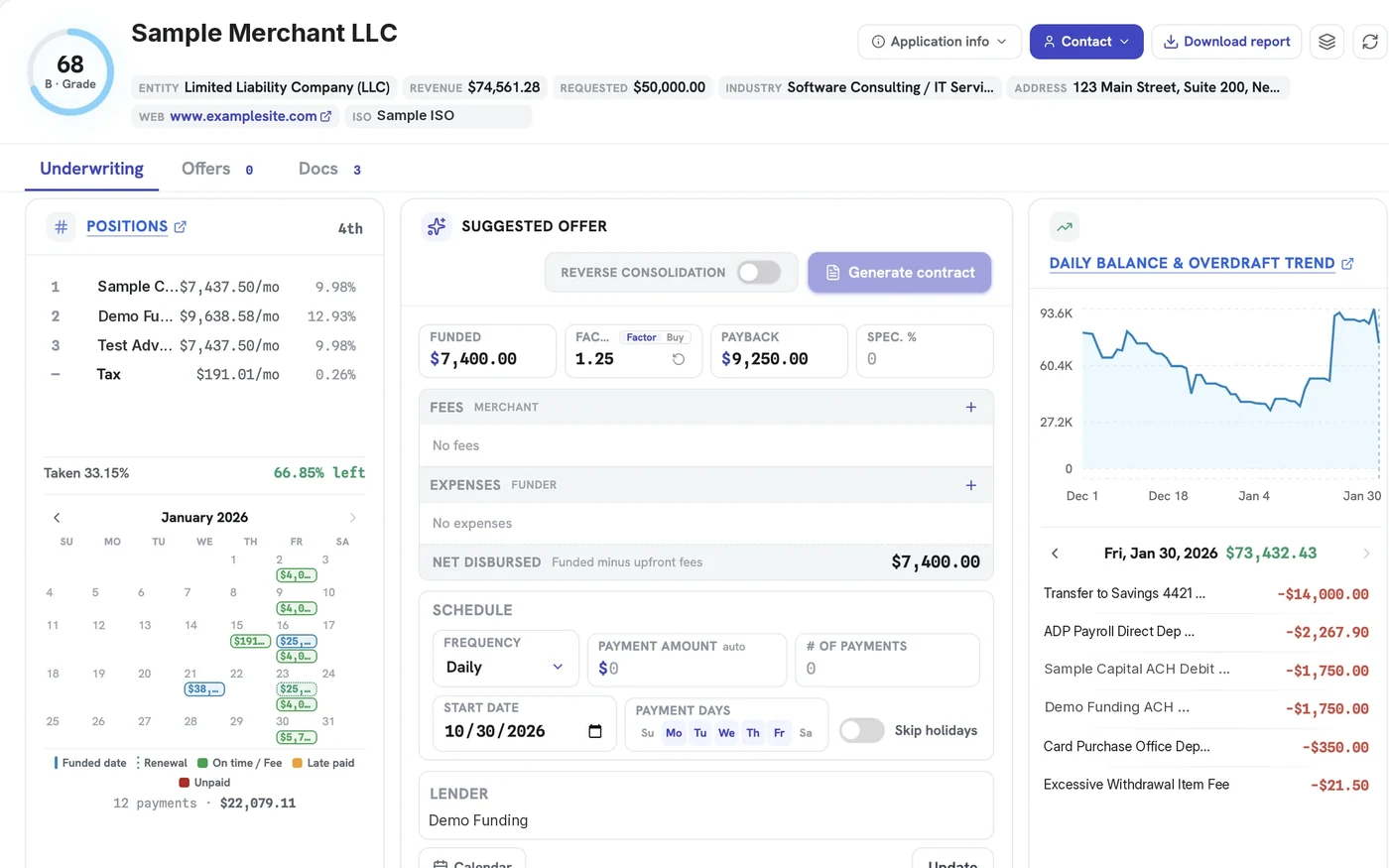
AI reads every bank statement, scores the deal against your box, and tracks it to payoff.
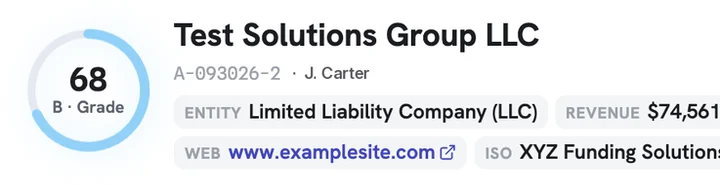
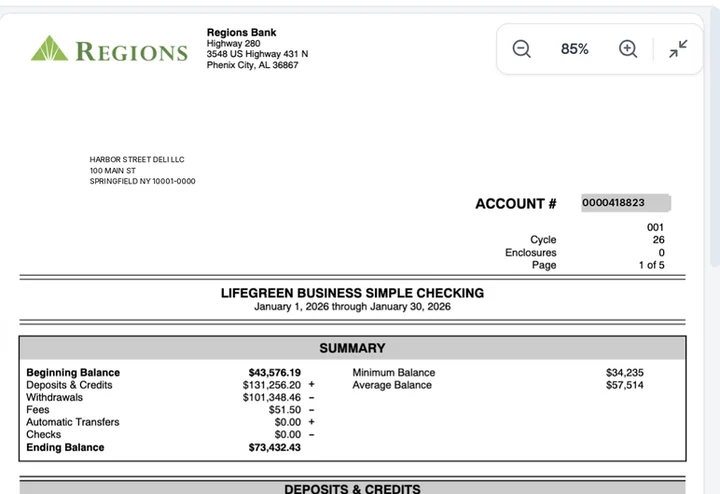
Bank statements are parsed automatically. Each file is then scored, graded and matched with an offer using the criteria you set in your account.
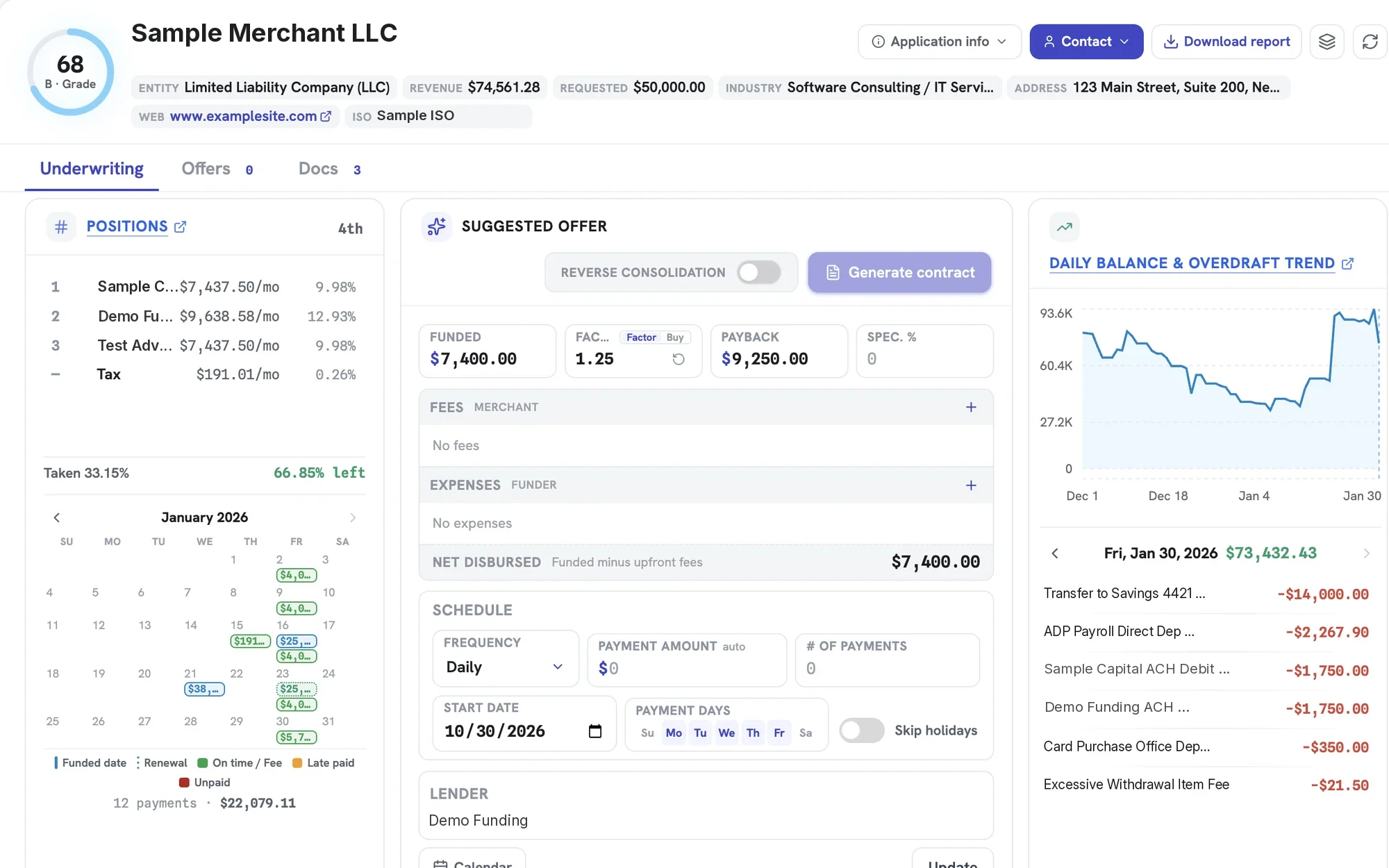
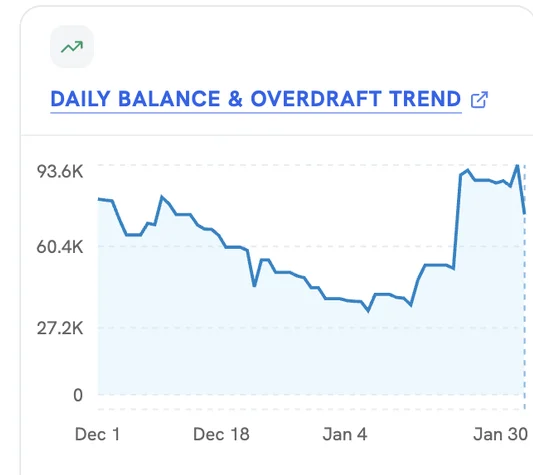
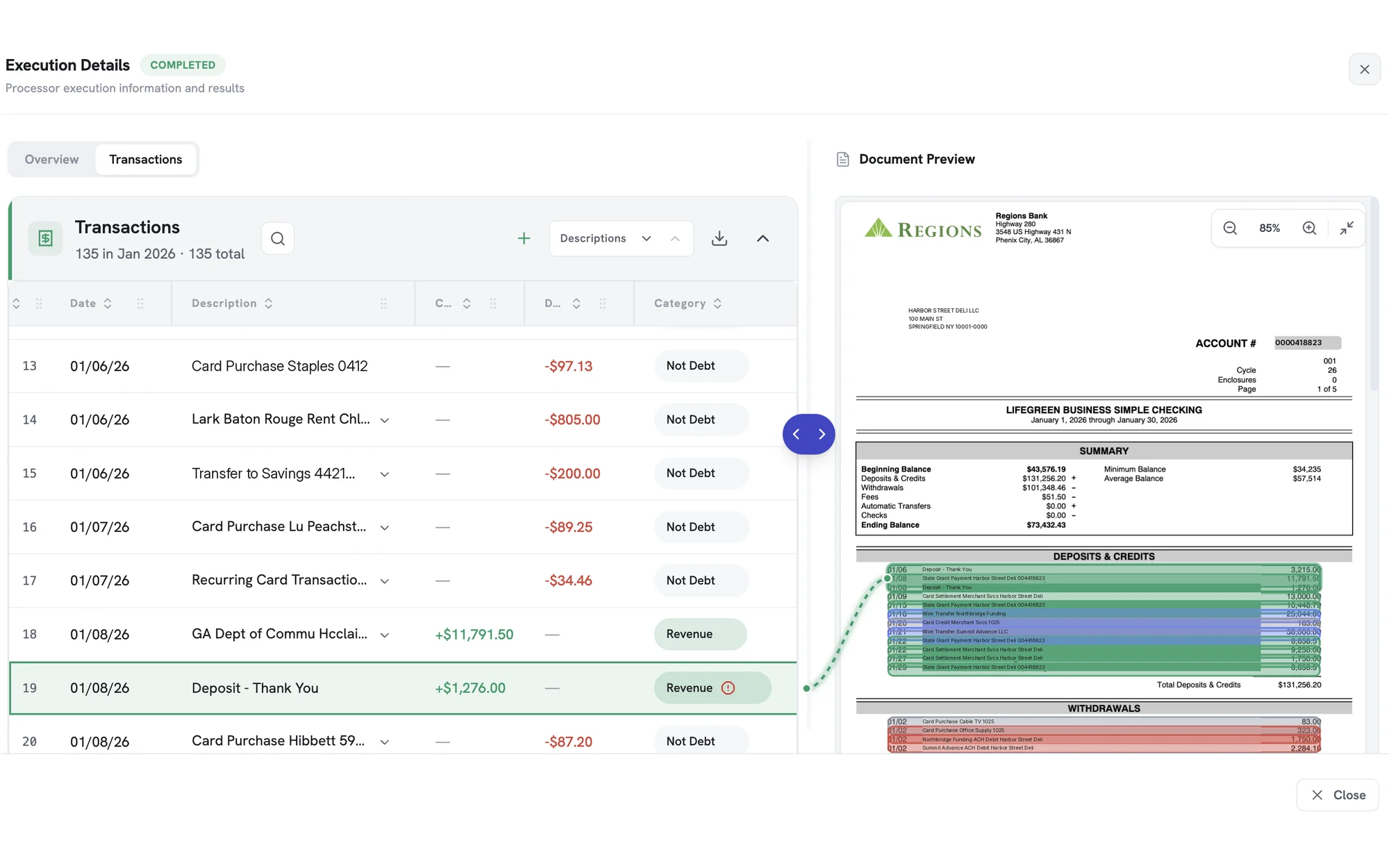
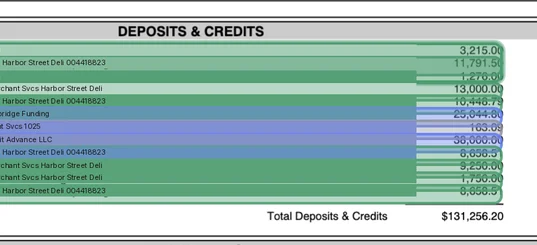
Every parsed transaction is traced back to its line on the bank statement, so you can check the numbers yourself.
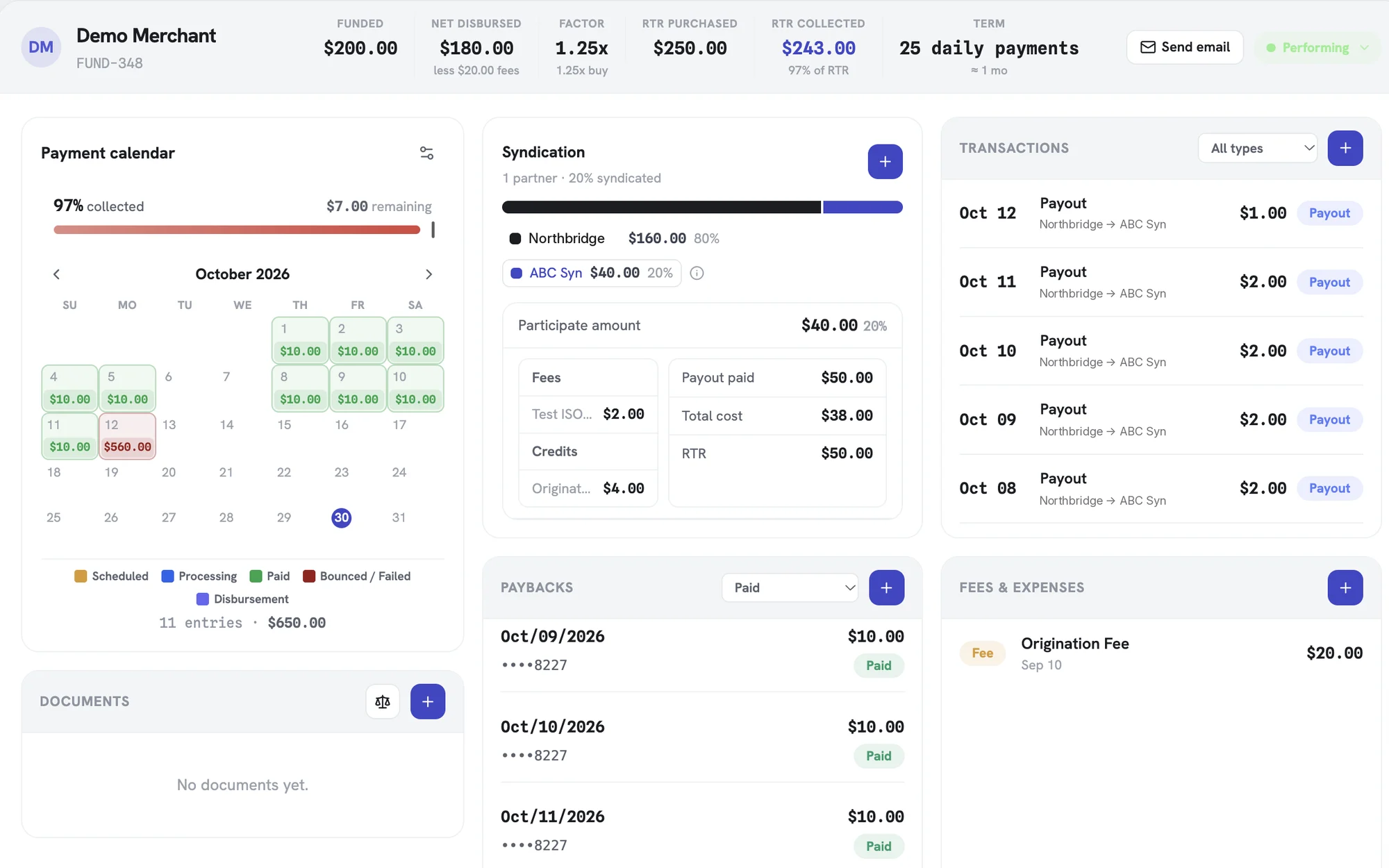
Payment calendar, syndication, paybacks and fees for each deal after it funds.
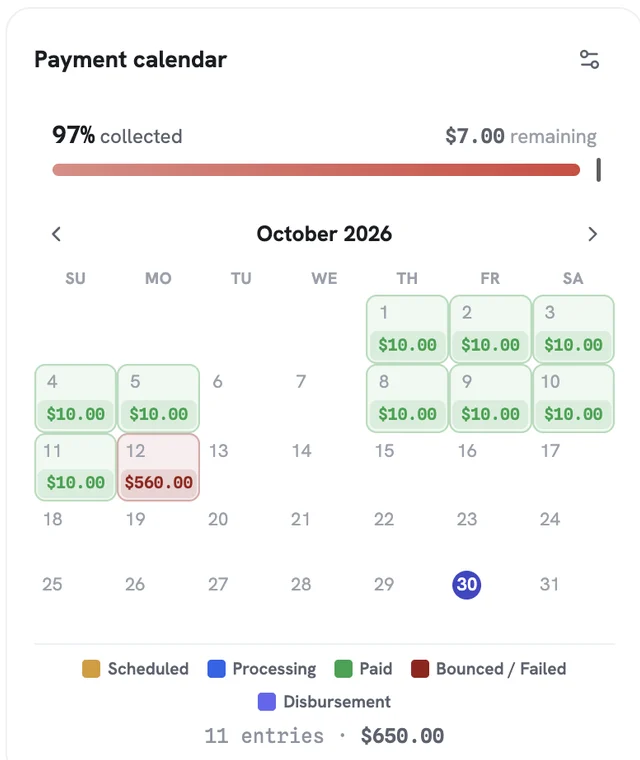
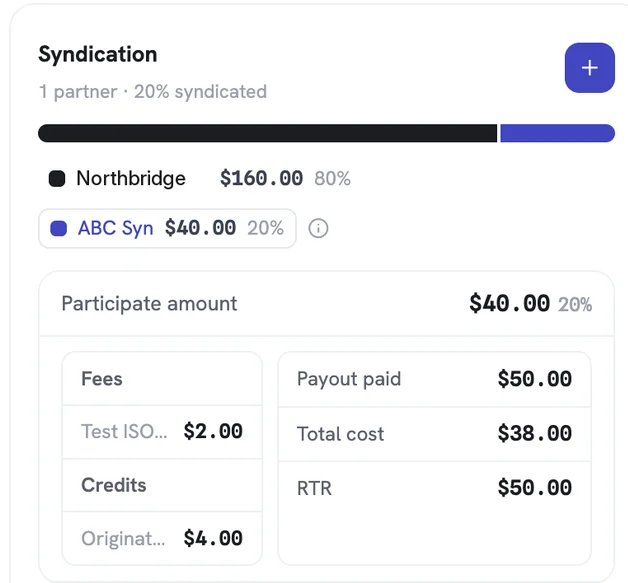
Each syndicator gets their own portal with deal progress, payouts, fees and every transaction.
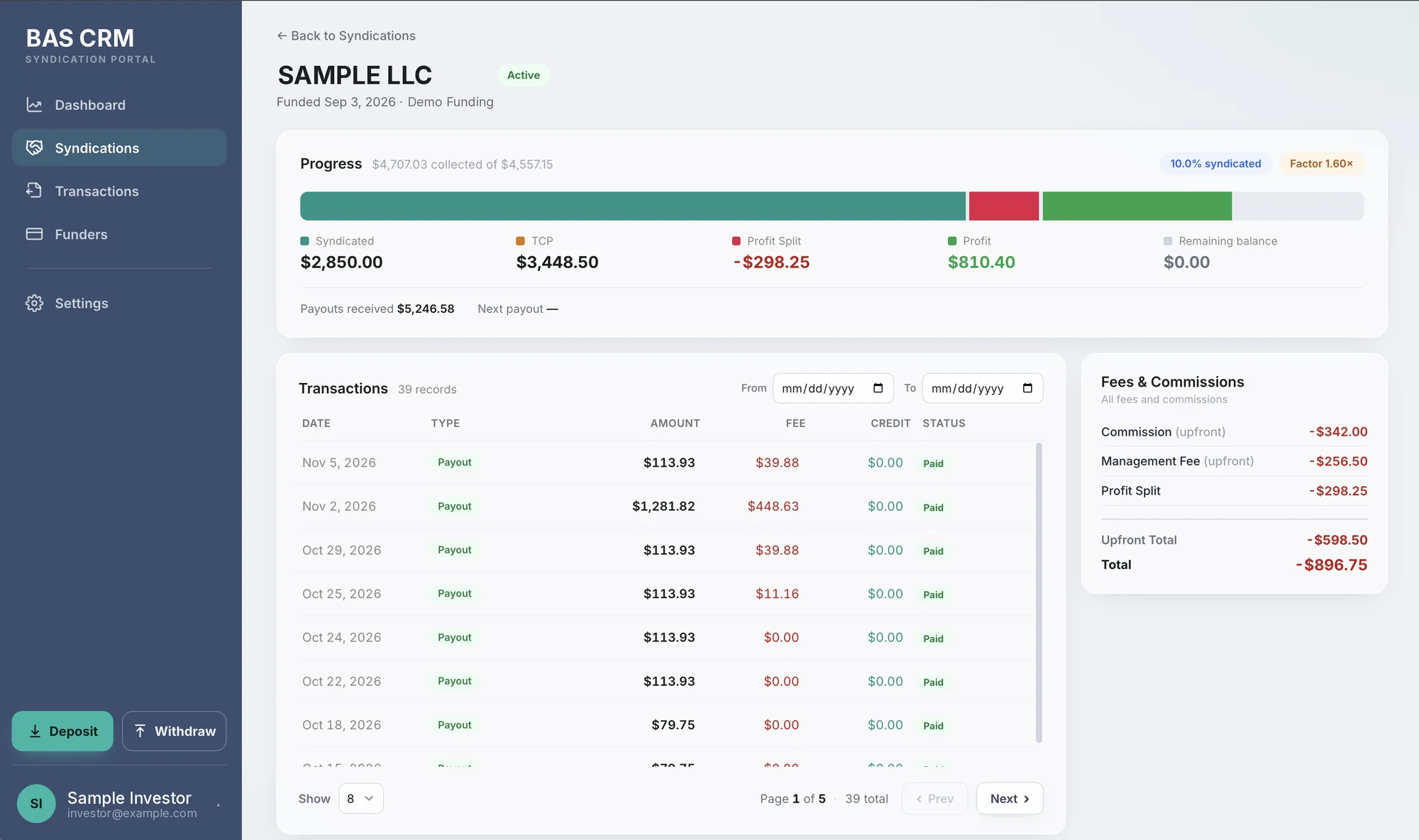
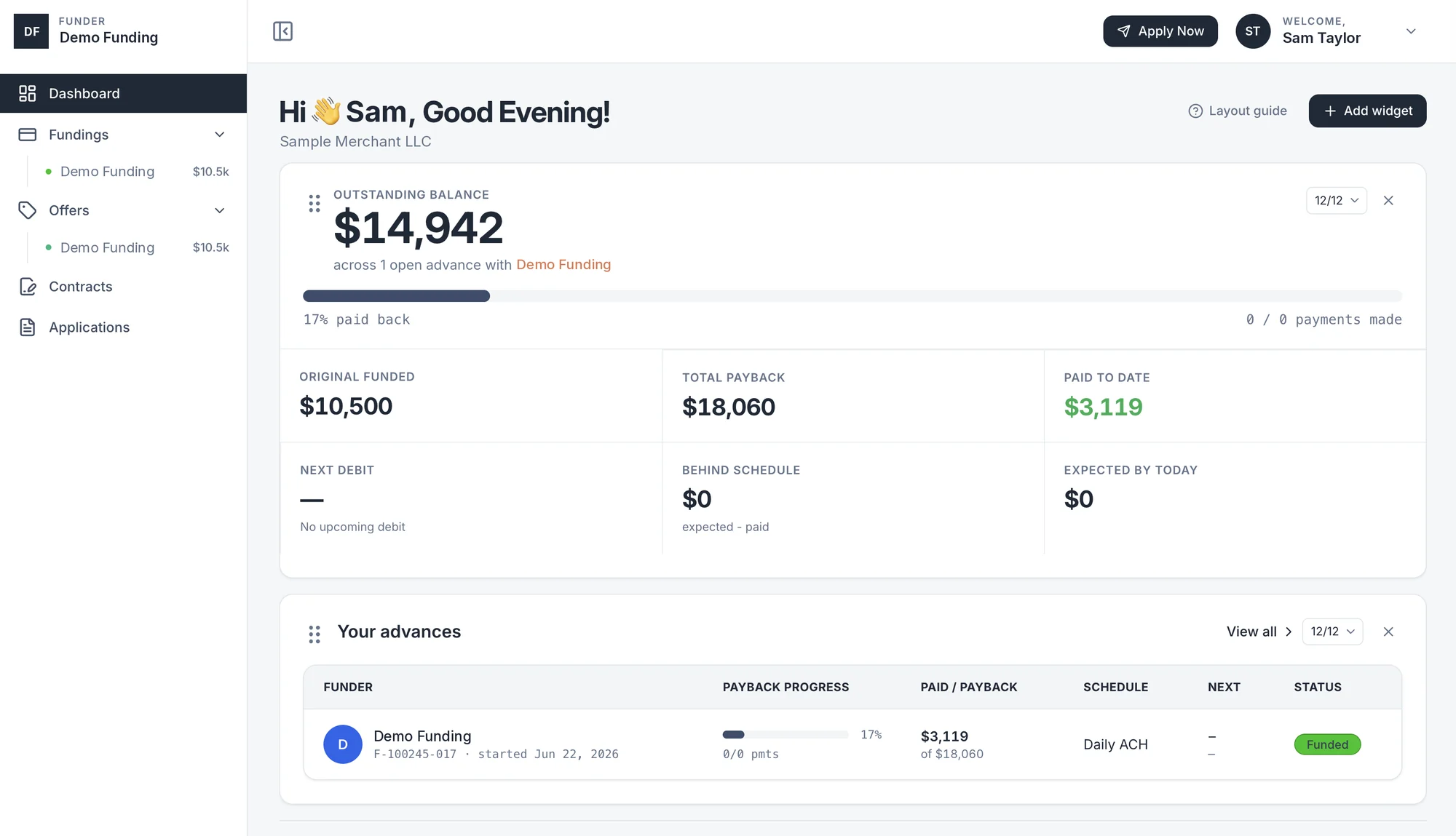
Each merchant gets a portal with their balance, payback progress, contracts and offers, so fewer calls come to your team.
Bank statements are parsed automatically, and every transaction is traced back to its line on the statement.
Each file is scored, graded and matched with an offer using the criteria you set in your account.
After funding, the payment calendar, syndication, paybacks and fees are tracked on every deal.
Bank statements read automatically, no retyping.
Every file scored against your own funding box.
Matched with an offer from the criteria you set.
Each parsed transaction traced to its statement line.
Every funded deal’s payments, day by day.
Participants, paybacks and fees on each deal.
Book a demo and we’ll walk you through it.
BAS CRM works with these payment, banking, underwriting and communication tools, and checks the public records funders rely on.
Product names and trademarks belong to their owners. Public-record sources are data sources BAS CRM checks, not partners.
Bookkeeping is billed by the hour, and your rate drops as your weekly hours grow. Tax and business services are priced per service.
| 40+ hours On site option free of charge | $60 |
| 30–39 hours | $63 |
| 25–29 hours | $65 |
| 20–24 hours | $70 |
| 15–19 hours | $75 |
| 11–14 hours | $80 |
| 6–10 hours | $85 |
| 0–5 hours | $90 |
| Review / manager hours | $120 |
| Sales tax, bookkeeping client | $175 |
| Sales tax, non-bookkeeping client | $325 |
| Business year-end taxes | from $1,950 |
| Business year-end taxes, 1 partner | from $2,350 |
| Each additional partner | from $275 |
| Personal year-end taxes | from $350 |
| Full-year write-up (previous year) | from $1,900 |
| Partner / manager consulting, hourly | from $350 / $275 |
| State and federal notices / audit, hourly | $115 |
| Corporation formation | from $600 |
| Cash analysis | $2,000 ($1,000–$4,000) |
“From” prices are starting prices. The final price depends on the size and complexity of the work.
Book a call and we’ll review your book and tell you which services and hours fit.
MCA industry insight, bookkeeping and accounting advice, and plain-English tax guides from the BAS team.
MCA insight, bookkeeping tips and tax guides from the BAS team, straight to your inbox.
Texas, a state associated with limited government intervention and freedom of business to operate and succeed in a capitalist society, stands at a crossroads.
Governor Greg Abbott has until June 22nd to decide whether to sign House Bill 700 into law—a decision that could fundamentally reshape how small businesses access capital in the Lone Star State. If he signs it, or simply lets the deadline pass without action, this sweeping legislation will take effect on September 1, 2025. The action will potentially cut off vital funding sources for thousands of Texas entrepreneurs, in a direct assault on the merchant cash advance industry that has been a lifeline for the people of his state.
The stakes couldn’t be higher. While supporters frame HB 700 as consumer protection, this bill targets sales-based financing—financial tools that have become lifelines for small businesses shut out of traditional bank lending.
Small business owners know the frustration of walking into a bank and walking out empty-handed all too well. Traditional lenders have tightened their belts, especially for newer businesses, minority-owned enterprises, and companies in industries deemed “risky.” When a restaurant owner needs quick capital to fix a broken freezer, or a contractor requires funds to purchase materials for a big job, they can’t wait weeks for a bank’s approval process. They need solutions now.
That’s where alternatives come in. Revenue-based financing provides capital based on future sales, not credit scores or lengthy financial histories. Yes, they can be more expensive than bank loans—but they’re also available when banks say no.
This financing drives business growth, job creation, and the health of Main Street. When small businesses can access capital quickly, they expand, hire employees, and strengthen their communities.
HB 700 goes far beyond simple disclosure requirements. While transparency is important—and most responsible providers already provide clear terms—this bill creates a regulatory maze that could price many providers out of the Texas market entirely.
The bill imposes sweeping new requirements that will fundamentally change how sales-based financing companies operate in Texas. Companies providing commercial sales-based financing must register with the Office of Consumer Credit Commissioner by December 31, 2026, including both direct providers and brokers, with mandatory annual renewals and fees.
For any financing under $1 million, sales-based financing providers must provide extensive disclosures covering everything from total financing amounts and disbursement details to payment schedules, additional fees, prepayment penalties, and even broker compensation arrangements. The operational restrictions go much deeper, voiding confession of judgment clauses entirely and requiring companies to obtain recipient signatures on all disclosures before finalizing any transaction.
Perhaps most problematic is the prohibition on automatic debiting of recipient accounts unless companies hold a “validly perfected first-priority security interest”—a legal standard that’s nearly impossible to meet in practice and effectively kills the streamlined payment processes that make revenue-based financing work for the funders, and by extension, the merchants.
The Finance Commission of Texas gains broad authority to identify and prohibit “unfair, deceptive, or abusive” practices, though interestingly, they cannot set maximum interest rates or fees. Violations carry steep civil penalties of $10,000 each, and the law applies to any provider offering services to Texas recipients via the Internet, regardless of where the company is physically located. These aren’t minor regulatory adjustments—they represent a complete overhaul that could drive legitimate capital providers out of the Texas market entirely.
This isn’t just bureaucratic red tape. It’s a fundamental misunderstanding of how modern business financing works. Revenue-based financing depends on streamlined payment processes tied to daily sales. Without this mechanism, the entire business model becomes unworkable.
If HB 700 becomes law, the consequences will ripple through Texas’s economy. Small businesses already struggling with inflation, labor shortages, and supply chain disruptions will lose access to flexible financing options. Rural businesses, minority-owned enterprises, and startups will be hit hardest—exactly the businesses Texas should be supporting.
The irony is stark. Texas has built its reputation as a business-friendly state, attracting companies fleeing overregulation in other states. HB 700 threatens to undermine that competitive advantage by making it harder for small businesses to access the capital they need to grow.
The voices of actual small business owners have been largely absent from this debate. Many don’t even know this legislation exists, despite its potential impact on their operations. Those who are aware express frustration that lawmakers are making decisions about their financing options without understanding their real-world needs.
Governor Abbott faces a clear choice. He can sign legislation that will likely drive responsible funders out of Texas, or he can recognize that small businesses need access to diverse financing options.
The goal should be protecting businesses from truly predatory practices while preserving their ability to access capital when traditional banks won’t help. That requires nuanced policy, not broad restrictions that treat all alternative finance providers as predators.
The battle against MCA regulation in Texas isn’t really about merchant cash advances—it’s about whether Texas will remain a place where small businesses can find the capital they need to thrive. Governor Abbott’s decision will determine not just the fate of HB 700, but the future of small business financing in Texas.
The countdown has begun. Texas small businesses are watching and waiting.
David Roitblat is the founder and CEO of Better Accounting Solutions, an accounting firm based in New York City, and a leading authority in specialized accounting for merchant cash advance companies. To connect with David or schedule a call about working with Better Accounting Solutions, email [email protected].
We’re so happy you found this article informative! Head back to our blog page to learn more tips, tricks, and guidance on accounting to maximize your business’s growth and development.
Book a call or send a message. We reply within one business day.
Tell us about your shop and we’ll reply with next steps.
Effective date: April 23, 2021
Better Accounting Solutions ("us", "we", or "our") operates the https://betteraccountingsolutions.com website (hereinafter referred to as the "Service").
This page informs you of our policies regarding the collection, use, and disclosure of personal data when you use our Service and the choices you have associated with that data.
We use your data to provide and improve the Service. By using the Service, you agree to the collection and use of information in accordance with this policy. Unless otherwise defined in this Privacy Policy, the terms used in this Privacy Policy have the same meanings as in our Terms and Conditions, accessible from https://betteraccountingsolutions.com
We collect several different types of information for various purposes to provide and improve our Service to you.
We do not sell your data under any circumstance.
While using our Service, we may ask you to provide us with certain personally identifiable information that can be used to contact or identify you ("Personal Data"). Personally identifiable information may include, but is not limited to:
We may also collect information on how the Service is accessed and used ("Usage Data"). This Usage Data may include information such as your computer's Internet Protocol address (e.g. IP address), browser type, browser version, the pages of our Service that you visit, the time and date of your visit, the time spent on those pages, unique device identifiers and other diagnostic data.
We use cookies and similar tracking technologies to track the activity on our Service and hold certain information.
Cookies are files with small amount of data which may include an anonymous unique identifier. Cookies are sent to your browser from a website and stored on your device. Tracking technologies also used are beacons, tags, and scripts to collect and track information and to improve and analyze our Service.
You can instruct your browser to refuse all cookies or to indicate when a cookie is being sent. However, if you do not accept cookies, you may not be able to use some portions of our Service. You can learn more how to manage cookies in the Browser Cookies Guide.
Examples of Cookies we use:
Better Accounting Solutions uses the collected data for various purposes:
Your information, including Personal Data, may be transferred to — and maintained on — computers located outside of your state, province, country or other governmental jurisdiction where the data protection laws may differ than those from your jurisdiction.
If you are located outside United States and choose to provide information to us, please note that we transfer the data, including Personal Data, to United States and process it there.
Your consent to this Privacy Policy followed by your submission of such information represents your agreement to that transfer.
Better Accounting Solutions will take all steps reasonably necessary to ensure that your data is treated securely and in accordance with this Privacy Policy and no transfer of your Personal Data will take place to an organization or a country unless there are adequate controls in place including the security of your data and other personal information.
Better Accounting Solutions may disclose your Personal Data in the good faith belief that such action is necessary to:
The security of your data is important to us, but remember that no method of transmission over the Internet, or method of electronic storage is 100% secure. While we strive to use commercially acceptable means to protect your Personal Data, we cannot guarantee its absolute security.
We may employ third party companies and individuals to facilitate our Service ("Service Providers"), to provide the Service on our behalf, to perform Service-related services or to assist us in analyzing how our Service is used.
These third parties have access to your Personal Data only to perform these tasks on our behalf and are obligated not to disclose or use it for any other purpose.
Our Service may contain links to other sites that are not operated by us. If you click on a third party link, you will be directed to that third party's site. We strongly advise you to review the Privacy Policy of every site you visit.
We have no control over and assume no responsibility for the content, privacy policies or practices of any third party sites or services.
Our Service does not address anyone under the age of 18 ("Children").
We do not knowingly collect personally identifiable information from anyone under the age of 18. If you are a parent or guardian and you are aware that your Children has provided us with Personal Data, please contact us. If we become aware that we have collected Personal Data from children without verification of parental consent, we take steps to remove that information from our servers.
We may update our Privacy Policy from time to time. We will notify you of any changes by posting the new Privacy Policy on this page.
We will let you know via email and/or a prominent notice on our Service, prior to the change becoming effective and update the "effective date" at the top of this Privacy Policy.
You are advised to review this Privacy Policy periodically for any changes. Changes to this Privacy Policy are effective when they are posted on this page.
If you have any questions about this Privacy Policy, please contact us: